
Candidate sentiment survey: Part one – AI and the workplace
Paul McArdle | Talent & Recruitment Columnist | The Currency

The Panel is a recruitment consultancy that places talent at the “C” suite level across all business sectors. Twice a year, we conduct a Candidate Sentiment Survey in association with The Currency to gauge candidates’ attitudes toward specific topics. This is part one of our two-part survey.
Here are the details of the survey:
- 1,331 candidates completed the survey.
- The candidates surveyed were from junior management to the “C” suite level in the IT, finance, accounting, legal, HR, banking, and ESG professions.
- The candidates were presented with a multiple-choice answer for every question.
- Where the same question was asked in our Summer 2025 survey, we compare it to Summer 2026.
- The survey had a “free text” box at the end, and close to 10 per cent of the candidates chose to give us their observations on certain topics. Their observations are under the relevant questions in italics.
Part One of the Candidate Sentiment Survey is all about AI.
*****
WITH THE ADVANCES I SEE IN AI, I BELIEVE
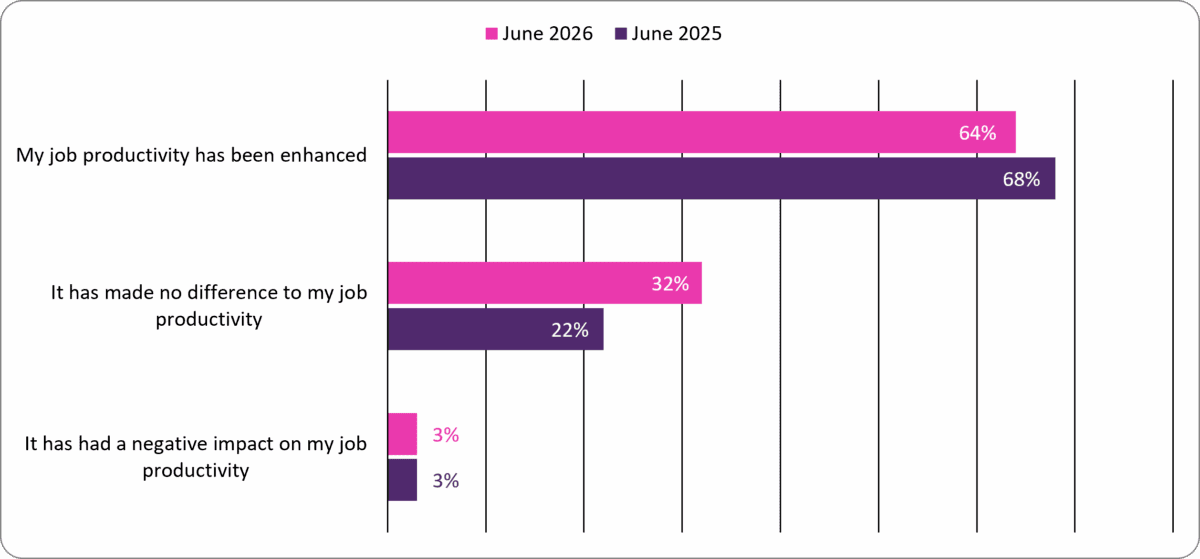
AI enhancing our respondents’ jobs is at a similar level to the survey 12 months ago, down slightly from 68 per cent to 64 per cent. The significant difference is that close to 50 per cent more people feel AI has made no difference to their productivity, compared with 22 per cent to 32 per cent.
As AI becomes more established in workflows, there is a significant drop-off in respondents who believe AI has a negative impact on their productivity, with a nearly 70 per cent drop, from 10 per cent to 3 per cent. This suggests that early fears about AI have not materialised for many people.
What the candidates said:
“I could not do my current job effectively without the help of AI. But equally, in its current form, AI couldn’t do most of my job either.”
“AI will bring true disruption to finance; however, AI washing is masking some of the real progress that is rapidly developing. Specialised upskilling and training are required for all finance teams over the coming 18-24 months.”
“AI is being positioned as a silver bullet for efficiency and cost reduction. The pragmatic voice on this topic has yet to be heard in earnest. In reality, it’s also choking the early-stage talent pipeline into organisations, and this won’t be truly visible until 2-3 years’ time.”
“AI made me work way more and made my working environment more complex.”
WHAT DO YOU THINK THE ADOPTION RATE OF AI TECHNOLOGY HAS BEEN IN YOUR COMPANY?
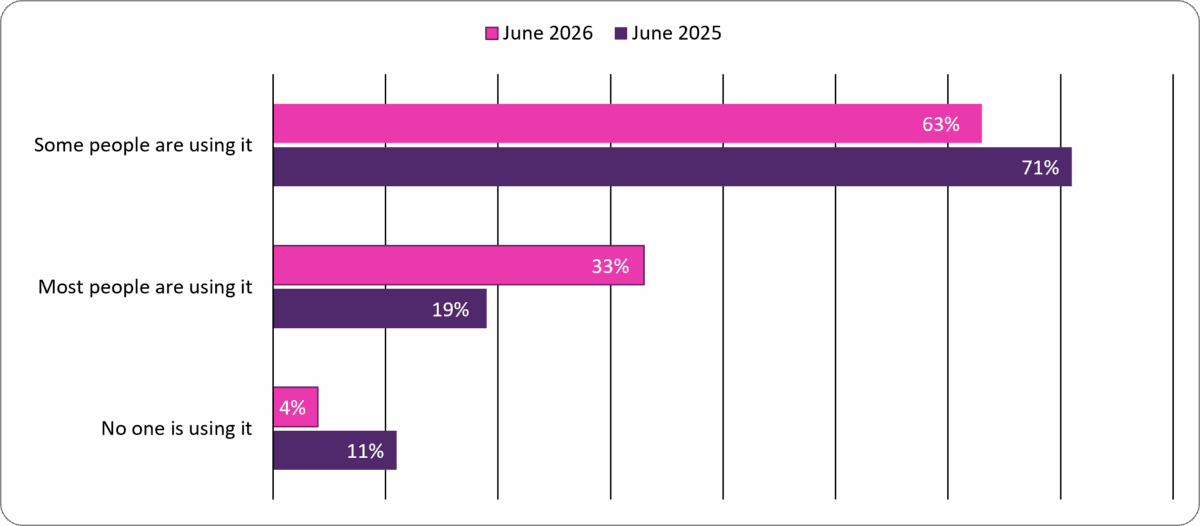
There have been significant changes in AI adoption over the last 12 months. While the respondents who said some people are using AI have fallen from 71 per cent to 63 per cent, this seems to have transferred to more people using AI, a close to 70 per cent increase, from 19 per cent to 33 per cent today.
Where one-in-ten were not using AI a year ago, that figure has fallen to one-in-twenty-five, a big change. This suggests that AI has moved from fringe to mainstream in most organisations.
What the candidates said:
“Too many Irish companies are too slow to deploy AI across their businesses.”
“Leaders are pushing the use of AI for work, but many employees feel that they do not have the time to experiment with new tools to find productivity gains, given the volume of work and tight deadlines.”
“Copilot is used in the company I work in, of 800, but only by a handful – likely developers. All the talk of AI taking our jobs and reading about all of the layoffs is quite depressing.”
“Application of AI in legacy companies is going to be a big challenge.”
WHAT AI TOOLS HAVE YOU USED FOR WORK IN THE LAST 12 MONTHS
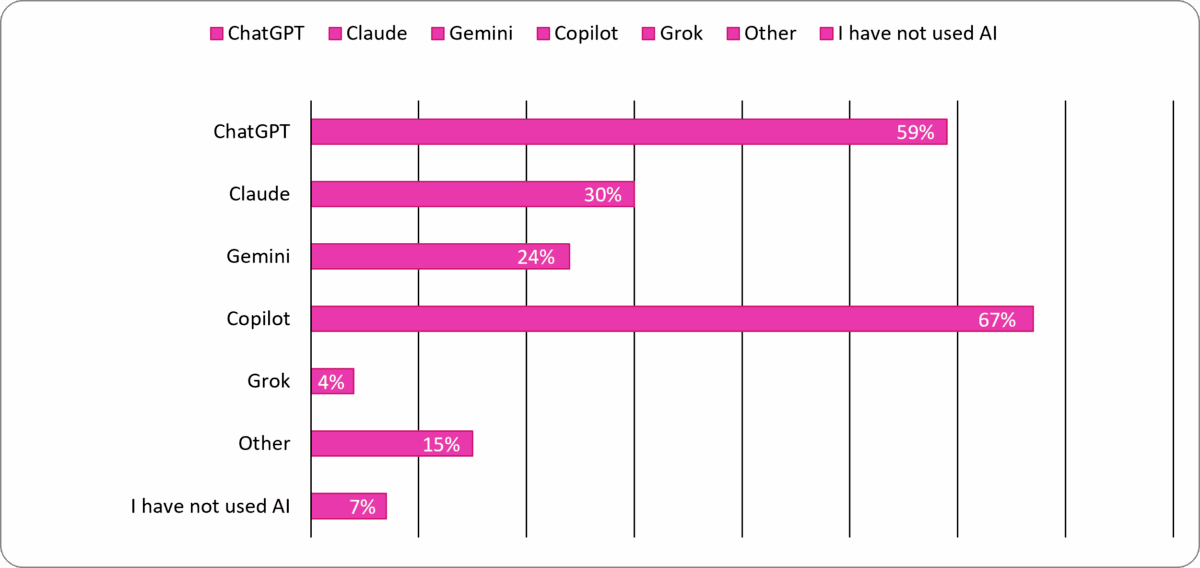
We asked those respondents who use AI to let us know their LLMs of choice. Copilot is the most popular, we believe, because it is integrated into Microsoft 365 and is being pushed by employers. ChatGPT is twice as popular as Claude (59 per cent to 30 per cent), with Google’s Gemini an honourable mention at 24 per cent.
What the candidates said:
“In terms of AI, I think there has to be careful adoption as there are many options out there – it’s all about choosing the right one at the right price.”
“AI is great but not perfect; you absolutely need to know what you are doing to get the most out of it.”
IS YOUR USE OF AI IN WORK DRIVEN BY…
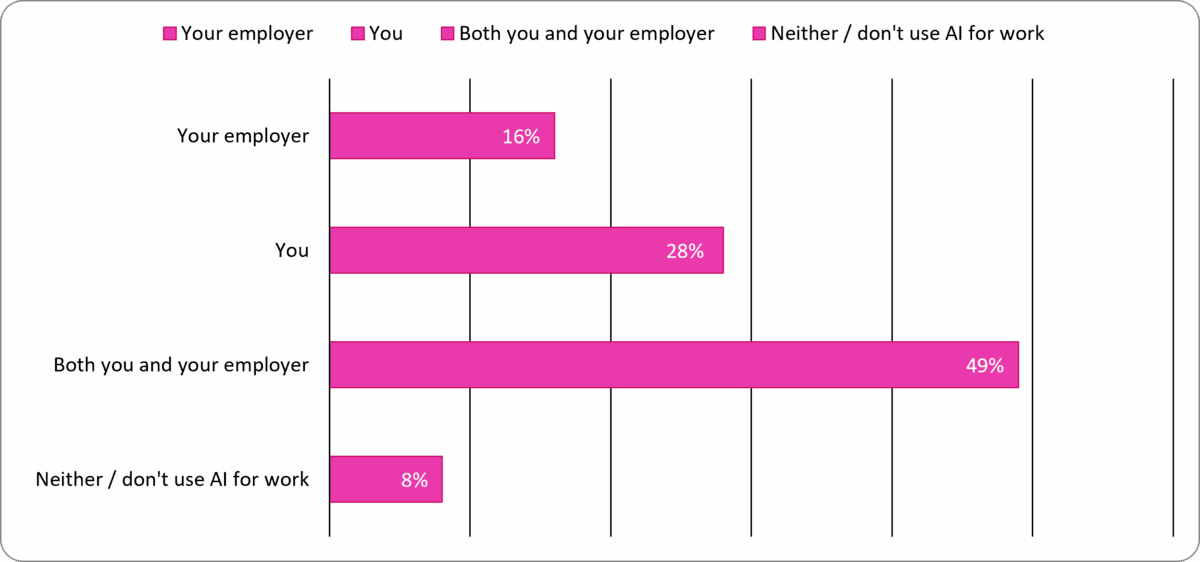
Half of the respondents collaborate with their employers on the use of AI, with both parties taking the initiative. One in eight of the respondents’ use of AI in work is driven by their employers, while over one in four are using AI on their own initiative. Fewer than 10 per cent of people are not using AI for work, a figure we expect to decline.
Employers are taking a more collaborative approach to AI adoption rather than a top-down management approach.
What the candidates said:
“My employer supports and encourages the use of AI, however, their expectation in terms of output has increased with that. The expectation to do more with less has never been greater across my entire company.”
“Large companies are seriously underestimating the cost of AI versus employees. The tool chosen by the bank I work for regularly runs out of tokens midway through the month, and there’s still an aggressive target to reduce the workforce.”
“AI being pushed with the expectation of having less staff – which will cause a drop-off in productivity.”
“Everyone is talking about implementing AI, but few have any ideas on ROI outside potential staff savings. Need to consider the whole picture and look into augmenting work, not replacing.”
“Management’s focus seems to be on harvesting employees’ intellectual property and then reducing staffing costs. Business process improvement is not the primary objective.”
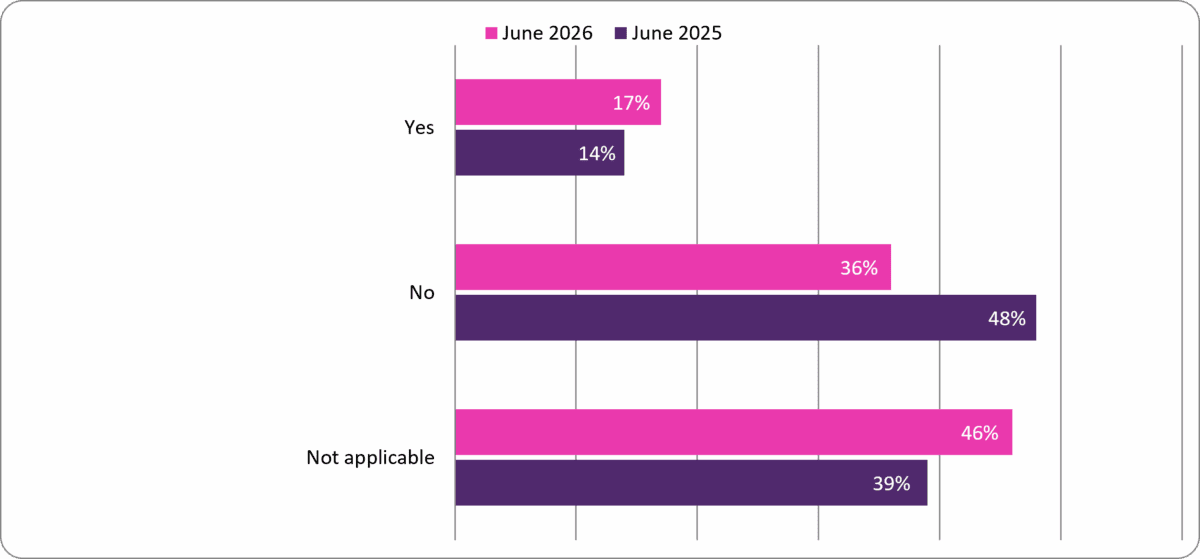
IF YOU HAVE INTERVIEWED IN THE LAST 12 MONTHS, WERE YOU INTERVIEWED/SCREENED BY AN AI AGENT/BOT?
WAS YOUR EXPERIENCE…
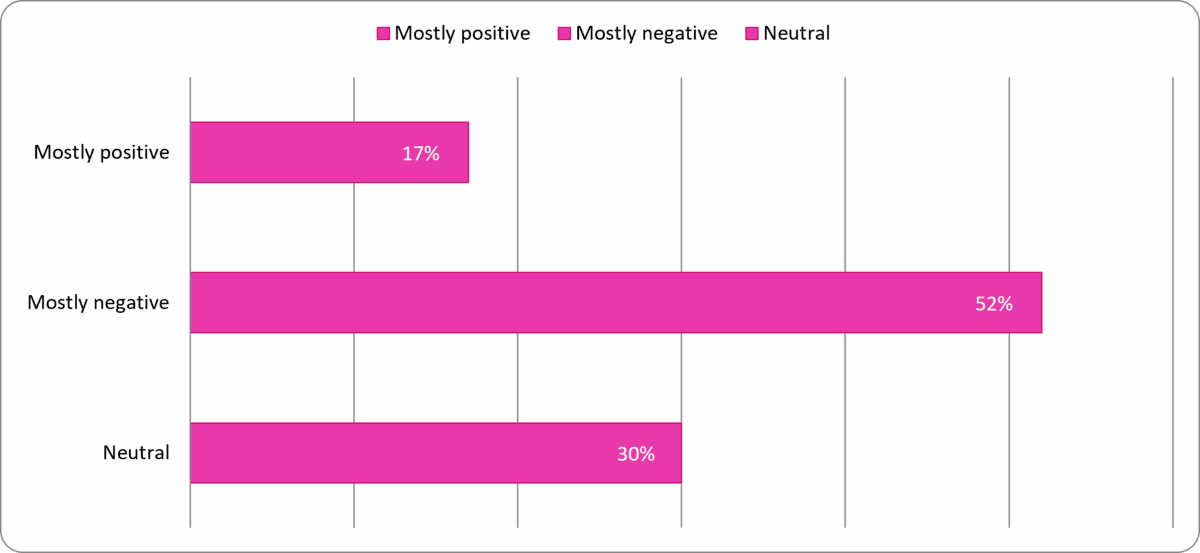
There was a 20 per cent increase in the number of respondents who have been screened by an AI bot (from 14 per cent to 17 per cent) over the last year. What is interesting is that half of this cohort had a negative experience with AI screening, something for employers to take note of.
What the candidates said:
“People are fed up with being screened by bots and getting automatic email rejections in the early hours of the morning. They want a real person reading their CV and application letter, they want real feedback on the phone or face to face.”
“The biggest challenge in applying for jobs is being screened by AI and age-related bias in ATS – they do not score experience vs keywords. Very frustrating when job matches are obvious, but ATS decides you don’t have the requisite experience.”
“I am currently looking for work, and AI limits the amount of time my CV is actually read and not just screened. Everyone will have the same CV eventually, so as not to get left out by AI.”
“AI makes job hunting unfair and discriminatory – employers prioritise individuals with 10 years of experience, leaving individuals with much more exposure but fewer years out of the market.”
“I don’t think most candidates actually know whether AI was used in their screening or not. Shouldn’t that be a question for recruitment agencies?”
Conclusion
AI is being normalised; it is playing a bigger part in our working day, with adoption increasing, albeit still patchy.
Most employers use Microsoft 365 products, so company-led AI usage sees Copilot as the most popular LLM. Respondents who are taking the initiative to upskill in AI are mostly using both ChatGPT and Claude.
While many respondents remain sceptical about AI, the normalisation of AI has led to fewer people worrying about it negatively impacting their roles.
Further Reading
Candidate sentiment survey: Part two – roles and the job market
