
Candidate sentiment survey: Part two – roles and the job market
Paul McArdle | Talent & Recruitment Columnist | The Currency

The Panel is a recruitment consultancy that places talent at the “C” suite level across all business sectors. Twice a year, we conduct a Candidate Sentiment Survey in association with The Currency to gauge candidates’ attitudes toward specific topics. This is part two of our two-part survey.
Here are some of the details:
- 1331 candidates completed the survey.
- The candidates surveyed were from junior management to the “C” suite level in the IT, finance, accounting, legal, HR, banking, and ESG professions.
- The candidates were presented with a multiple-choice answer for every question.
- Where the same question was asked in our Winter 2025 survey, we compare it to Summer 2026.
- The survey had a “free text” box at the end, and close to 10 per cent of the candidates chose to give us their observations on certain topics. Their observations are under the relevant questions in italics.
In part one, we examined the implications of AI on the workplace. Part two of the Candidate Sentiment Survey is all about what candidates feel about their roles and the job market today.
*****
IN THE LAST 3 YEARS I…
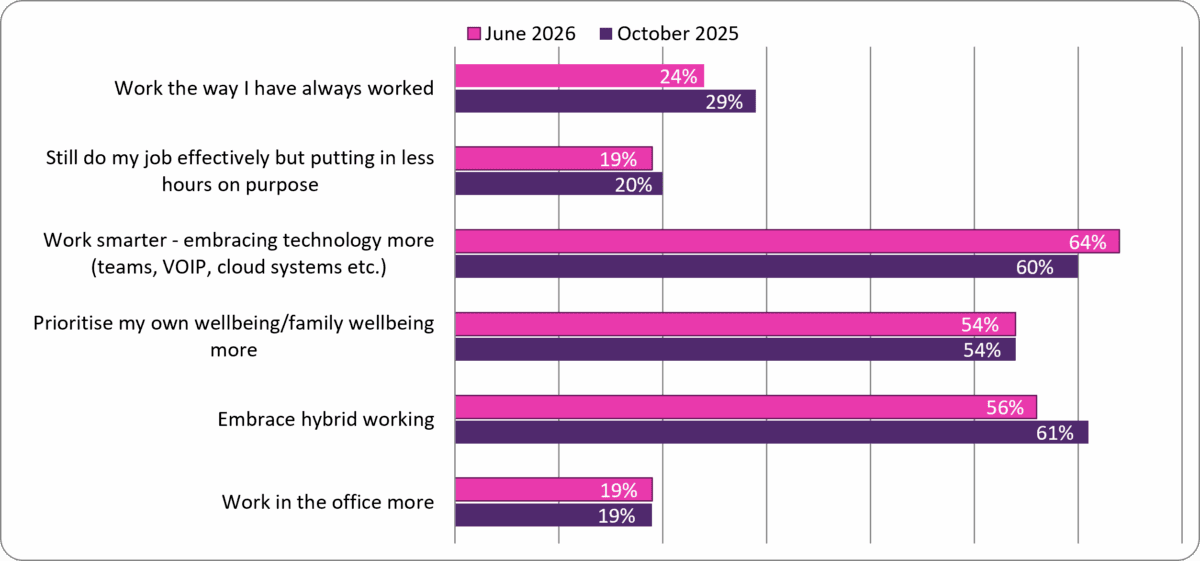
The figures have been fairly consistent for the last few surveys. Notably, one in five candidates is being asked to work in the office more often; we expect this figure to increase.
One figure to watch is “work the way I have always worked,” which dropped 20 per cent from 29 per cent to 24 per cent. This can be a combination of factors: working smarter, a rise from 60 per cent to 64 per cent in the use of AI, and more employers insisting on working in the office.
What the candidates said:
“Hybrid work is here to stay!”
“Use AI, but only because it is mandatory. Forced back to 4 days in the office, then have all meetings virtually and not speak to people in the office. It’s tracked and used as an excuse to fire people.”
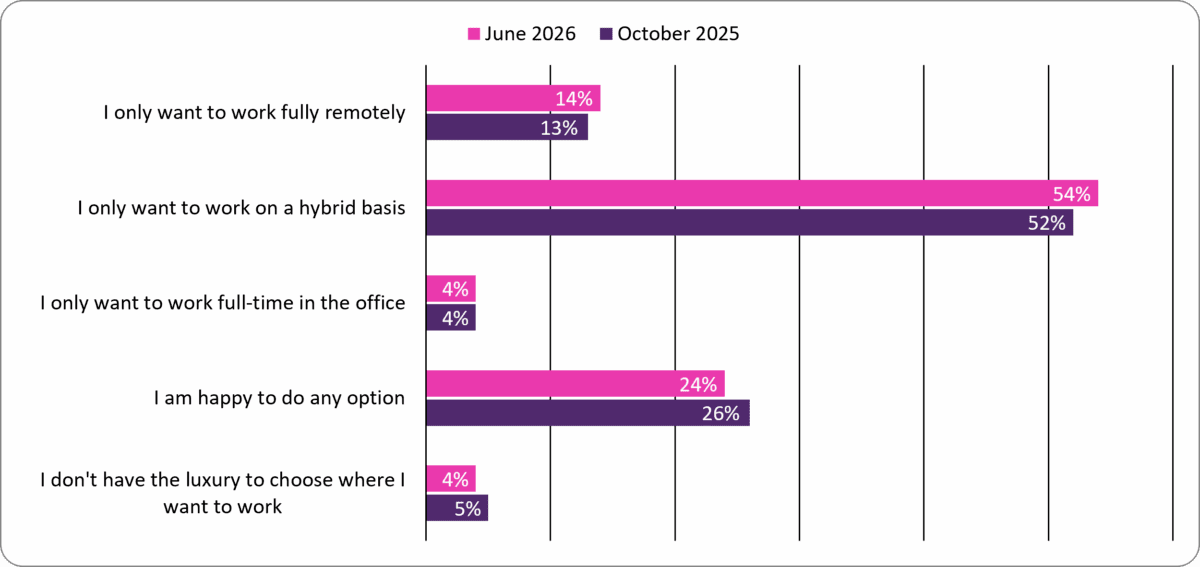
WHICH OF THESE STATEMENTS BEST REFLECTS WHERE YOU WOULD LIKE YOUR PLACE OF WORK TO BE TODAY?
MY EMPLOYER…
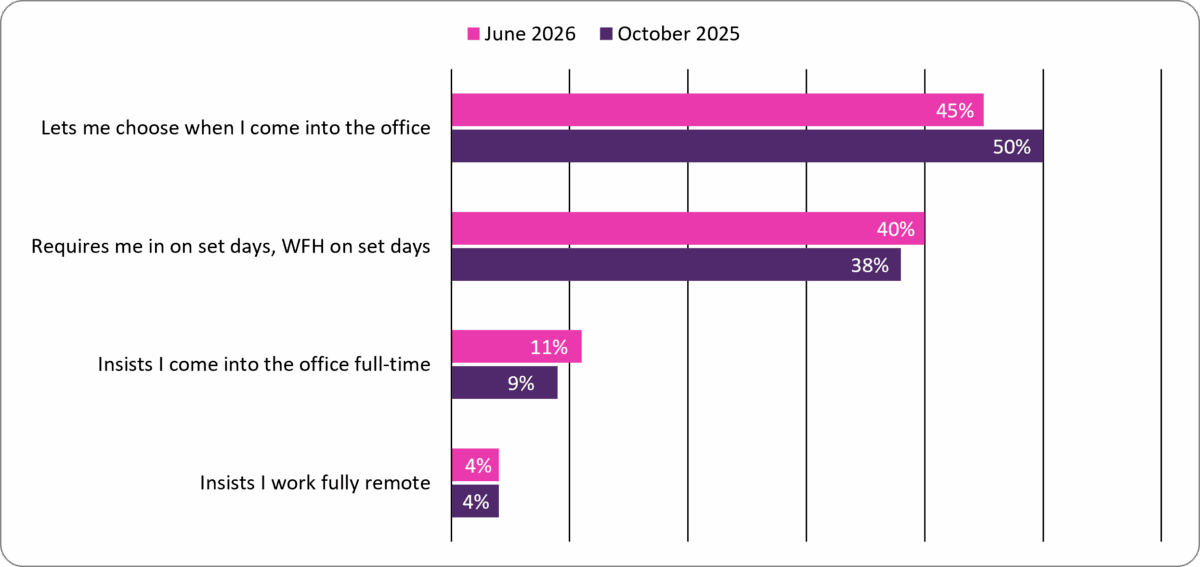
Remarkably consistent over the last few surveys, suggesting that for most, the workplace preferences have plateaued. That only one in twenty-five wants to work in the office full-time is still something for employers to be cognisant of.
Underlying figures to watch include the increase in employers asking their employees to return to the office, with a 20 per cent rise in employers requesting full-time in-office work, from 9 per cent to 11 per cent.
What the candidates said:
“In the next 12-18 months, I fear employers will gradually push back on hybrid working and opt for presenteeism over productivity.”
“Employers are asking more people to come into the office, but employees are hesitant and prefer the flexibility.”
“Some employees are actively refusing to attend the office in Dublin city centre due to safety concerns when commuting. It is very difficult to get employees back into the office on a regular basis.”
“Moving towards working from the office and rigid clock-in/working hours are a huge drawback, which counters employee productivity and satisfaction.”
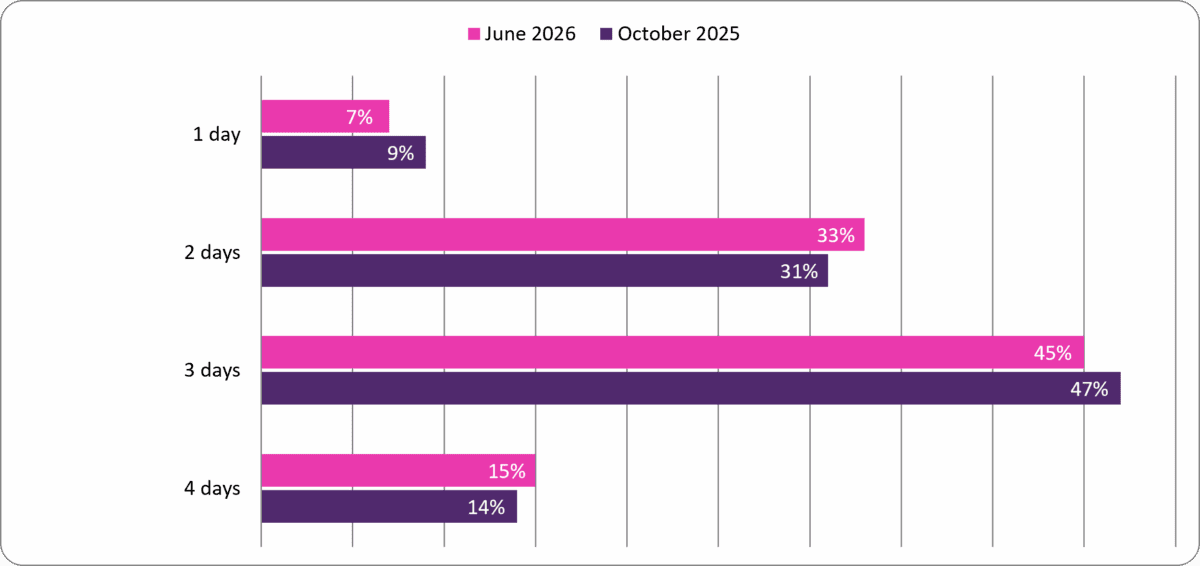
HOW MANY DAYS DOES YOUR EMPLOYER REQUIRE YOU TO COME INTO THE OFFICE?
AT THE MOMENT MY PHYSICAL WORKING ARRANGEMENTS ARE…
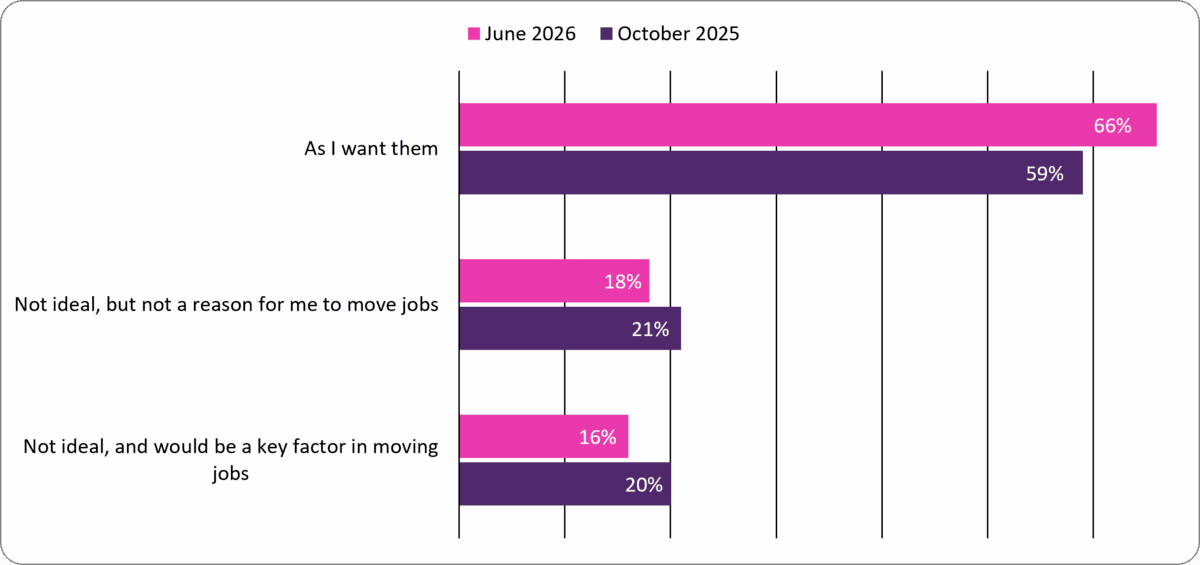
For respondents with hybrid arrangements, we wanted to see the direction of travel in the number of days they spend in the office.
While in previous surveys, two or three days in the office were at similar levels, now three days in the office is the most common hybrid arrangement, with just under half of respondents having this option. Only a third of the respondents now have the two-day option.
It is also worth noting that two-thirds of respondents have their working arrangements the way they want them.
What the candidates said:
“Two days in the office for my type of work (IT PM) is more than enough.”
“Hybrid with fixed working days is, in my view, a good option. Challenges still exist, though, as some employees had started to take the flexibility of remote working for granted.”
“Our policy is 50 per cent in the office – asking how many days doesn’t fit this type of work. I suggest using a percentage question instead.”
“I have rejected several job opportunities when it was clear that the RTO mandate was in full force or the company had no remote work allowed at all.”
“My productivity when working from home is increased as I don’t mind staying late if needs be. In the office, I chat a lot.”
“I have no obligation to go into the office. I work well from home, but I live alone – I know it’s not good for my mental and physical health, though. Is it my own fault?”
I FEEL THE BALANCE OF POWER IN THE PRESENT JOB MARKET IS…
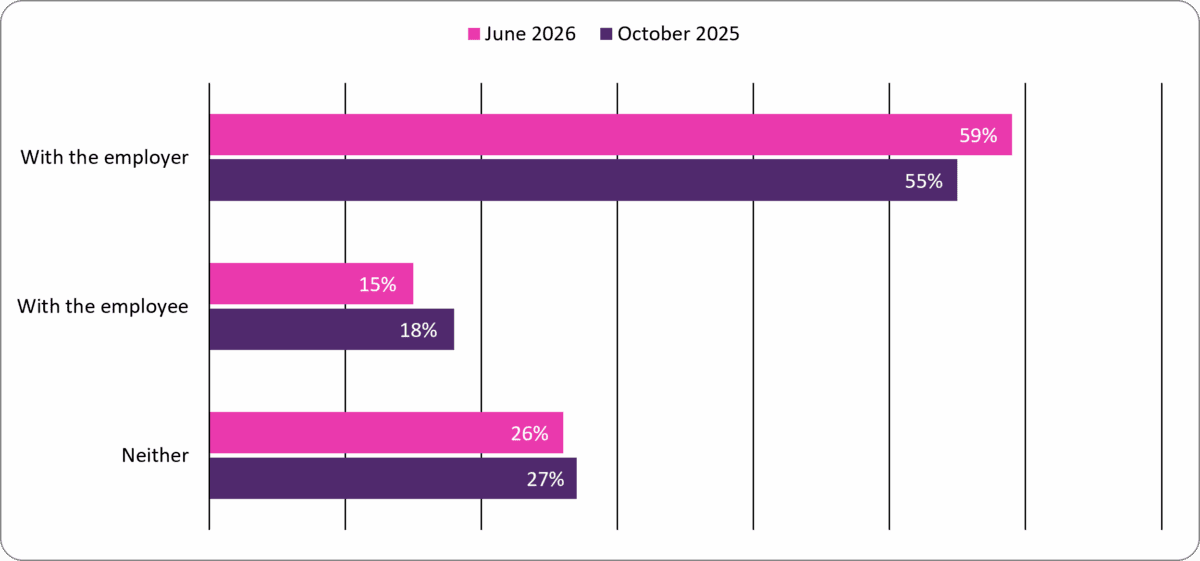
In the last few surveys, candidate sentiment has remained the same; the balance of power in the job market is increasingly with employers. In The Panel, we have a more nuanced view; overall, the direction of travel may be towards the employer, but not across all sectors. Where there is a dearth of available talent, employees still hold sway.
What the candidates said:
“The high level of uncertainty is affecting the job market and recruitment in general. Which is negative from a candidate perspective.”
“For lower-level roles, the balance of power is probably with the employer, but for the more senior levels, I think the balance of power is with the employee.”
“I am currently temping. Many applications I have sent are not even acknowledged. I have 25+ years of experience in the roles I apply for. Appears that agencies and employers don’t care about many applicants.”
“Companies are asking for experience, but they are not giving opportunities for people who want to change fields or start a career.”
“In my experience of the job market in the past 2 years, there is a bias against people aged 50+ and for those who took time out at any stage in their career.”
I THINK THE NEXT 12 MONTHS…
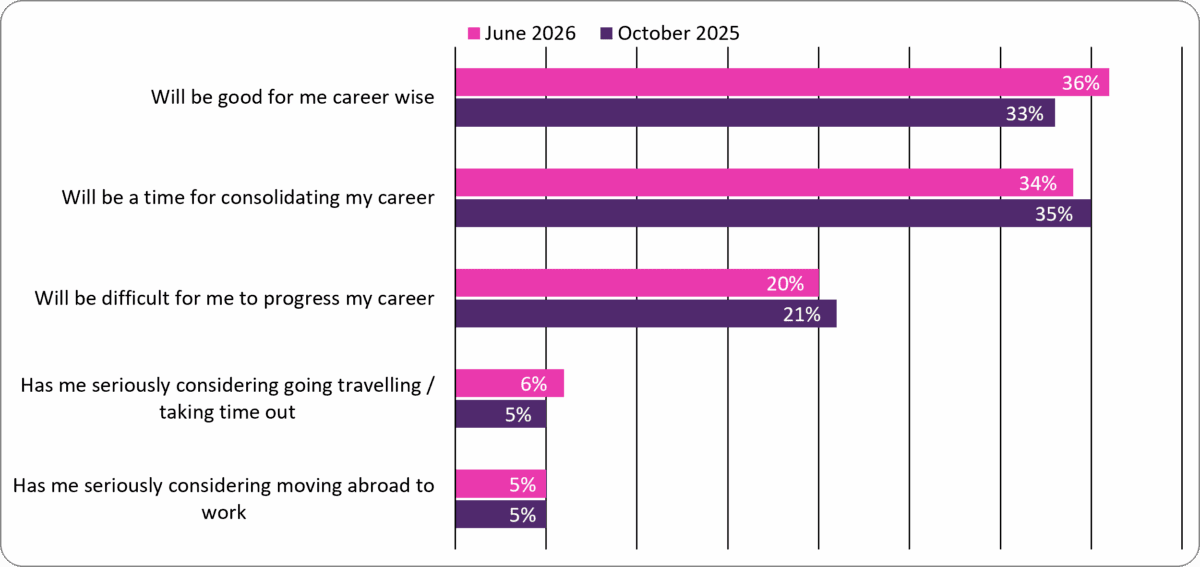
FROM MY OWN CAREER PERSPECTIVE, THE NEXT 12 MONTHS HAVE ME IN…
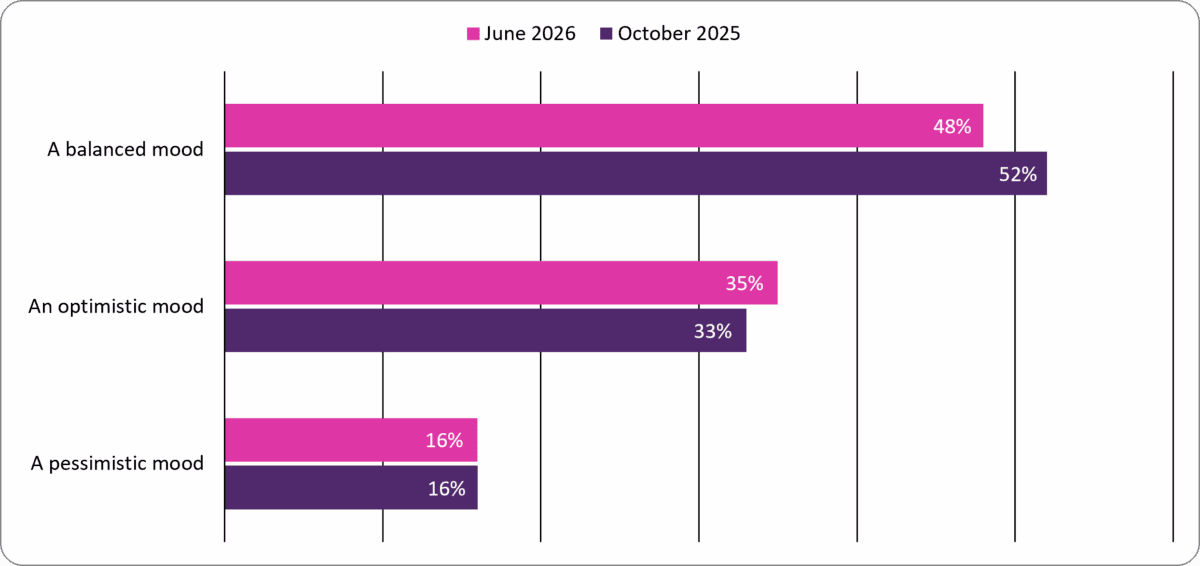
Similar results for the answers to both questions in this survey and the last one, with candidates slightly more optimistic overall.
What the candidates said:
“For what it’s worth – I have quit my job to work full time on AI-related software development and security. I think it is a great time for it.”
“The job market appears very buoyant at mid-level but less interesting at senior level, except for commercial contracts or technology lawyers.”
“I believe the job market has changed and fewer jobs will become available over the next 12 months.”
Conclusion
While employer power seems to be rising, candidate mood has also slightly increased. It seems that the job market is getting to a balanced state. As employers become less flexible on working arrangements, more employees are more accepting.
The rise of three days as the most popular hybrid arrangement is telling. Four days in the office seems to be a key driver of dissatisfaction among employees. For clients debating between three and four days in the office, that extra day can come at a disproportionate cost to their employees’ satisfaction and, therefore, to their business’s recruitment costs.
